Introduction
A conference room is much more than a space where people sit around a table and attend meetings. It is where business strategies are discussed, important decisions are made, clients are received, presentations are delivered, and teams exchange ideas. Because of this, the conference table often becomes the centrepiece of a professional office.
Choosing the right table involves more than selecting an attractive design. The table should provide sufficient seating space, allow people to work comfortably, accommodate laptops and meeting equipment, offer convenient cable management, and complement the overall office interior.
Pune has grown into a major commercial and business destination, with IT companies, startups, manufacturing units, consulting firms, educational institutions, financial organisations, and corporate offices operating across Hinjawadi, Baner, Kharadi, Wakad, Viman Nagar, Hadapsar, Balewadi, Aundh, and other areas. As businesses invest in better workplaces, the demand for functional and stylish office furniture has also increased.
With numerous conference table manufacturers in Pune offering different designs, materials, sizes, and customisation options, selecting the right manufacturer can sometimes be difficult. A small startup may need a simple six-seater meeting table, while a large company may require an impressive boardroom table designed for 15, 20, or more people.
This guide explains the key factors businesses should consider when choosing a conference table, including designs, materials, technology integration, ergonomics, customisation, maintenance, and coordination with other office furniture.
- Why Is the Conference Table So Important?
The conference table is usually the focal point of a meeting room. It needs to accommodate people as well as the technology they use during meetings.
Modern meetings may involve laptops, tablets, presentation screens, microphones, video conferencing systems, chargers, and other devices. A well-planned table should therefore make it easy for participants to connect and work without creating a mess of cables.
A good conference table can contribute to:
- Better meeting comfort
- Improved workspace organisation
- A professional office appearance
- Easier communication
- Better cable management
- Technology integration
- Efficient use of available space
The right size and shape depend on the number of users and the available room area. An oversized table can make a meeting room uncomfortable and difficult to navigate, while a table that is too small may leave participants with insufficient workspace.
- Popular Conference Table Designs
Modern offices can choose from a wide range of table shapes. The right option depends on the room size, number of participants, meeting style, and overall interior theme.
Rectangular Conference Tables
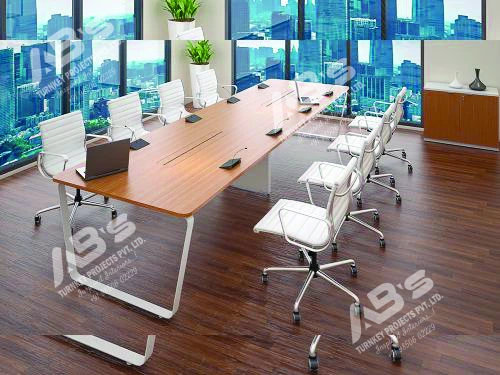
Rectangular tables are a classic choice for corporate offices. They offer clearly defined seating positions and are particularly suitable for boardrooms, management meetings, presentations, and client discussions.
Boat-Shaped Conference Tables
Boat-shaped tables are wider in the centre and slightly narrower at the ends. This design provides a spacious tabletop while making it easier for participants to see one another.
They are commonly used in medium and large conference rooms.
Oval Conference Tables
Oval tables offer a softer appearance because they do not have sharp corners. They can create a more relaxed and collaborative environment while still maintaining a professional appearance.
Round Conference Tables
Round tables are a practical option for small meeting rooms. Since there is no obvious head position, everyone around the table can participate more equally in discussions.
Modular Conference Tables
Modular tables consist of individual sections that can be rearranged or combined. They are particularly useful for offices where meeting spaces are used for different purposes.
- Selecting the Right Conference Table Size
The size of the conference table should match the number of people who regularly use the room.
For example, a small meeting space may require a table for four to six people. A medium conference room may accommodate eight to twelve people, while a large boardroom may need seating for 14, 18, 20, or more participants.
However, simply choosing a table based on seating capacity is not enough.
You also need to leave sufficient space around the table for chairs, movement, doors, storage, presentation equipment, and other furniture.
Before finalising a table, take accurate measurements of the room and prepare the complete furniture layout. This will help prevent problems after installation.
- Materials Used for Conference Tables
The material used in a conference table affects its appearance, durability, maintenance requirements, and overall cost.
Common materials include:
- MDF
- Particle board
- Plywood
- Laminated boards
- Natural wood veneer
- Solid wood
- Glass
- Metal
- Combination materials
Laminate
Laminate is widely used in commercial offices because it offers a large variety of colours, textures, and wood finishes. It is also relatively easy to clean and maintain.
Wood Veneer
Natural wood veneer provides a sophisticated and premium appearance. It is particularly suitable for executive offices and formal boardrooms.
Glass
Glass creates a modern and visually lightweight appearance. It can be particularly effective in offices with glass partitions and minimalist interiors.
Wood and Metal
Combining a wooden tabletop with a metal frame creates a contemporary industrial look. This style can work especially well in startups, creative agencies, and technology companies.
- Conference Tables with Technology Integration
Technology has become an essential part of modern meetings. Conference tables therefore need to accommodate more than notebooks and documents.
Depending on the requirements, a table can include:
- Electrical sockets
- USB charging ports
- HDMI connections
- Data ports
- Wireless charging
- Microphone connections
- Video conferencing equipment
- Concealed cable management
Instead of allowing cables to run across the tabletop, manufacturers can incorporate cable boxes, power modules, and concealed routes.
This keeps the table neat and reduces trip hazards.
When ordering a table, discuss your technology requirements with the manufacturer before production begins. This makes it easier to integrate the necessary connections into the design.
- Conference Tables for Corporate Boardrooms
Corporate boardrooms usually require a formal and premium appearance.
Large rectangular or boat-shaped tables are common choices. The table may be combined with executive chairs, large presentation displays, video conferencing systems, acoustic treatments, premium lighting, and storage cabinets.
A boardroom should represent the company’s professional identity while also providing comfortable seating for long meetings.
Depending on the office design, businesses can select wood veneer, premium laminate, glass, or custom finishes.
- Conference Tables for Startups
Startups generally prefer practical and flexible office furniture.
A compact meeting table can provide sufficient space for team discussions without taking up too much floor area.
Round, square, rectangular, or modular tables can all work well in startup environments.
Flexibility is particularly valuable for growing businesses. Instead of investing in a very large permanent boardroom, a startup can choose furniture that can be moved, expanded, or reconfigured as the company grows.
- Conference Tables for IT Companies
IT offices often require a combination of formal conference rooms and smaller collaboration areas.
A large conference table can be used for management meetings and client presentations, while smaller tables can serve project teams and informal discussions.
Technology integration is particularly important in IT workplaces. Video conferencing, laptops, display screens, charging points, and data connections may all be required.
The table should therefore be designed around the way the team actually conducts meetings.
- Custom-Made Conference Tables
Ready-made tables are suitable for many offices, but custom furniture can be a better solution when the room has unusual dimensions or specific requirements.
A custom conference table can be designed according to:
- Room dimensions
- Number of users
- Required seating arrangement
- Company colours
- Technology requirements
- Storage requirements
- Interior theme
- Available budget
Customisation also makes it possible to match the conference table with reception counters, executive desks, workstations, storage cabinets, and other furniture.
- The Role of Commercial Furniture Manufacturers
A conference room is only one component of a complete workplace.
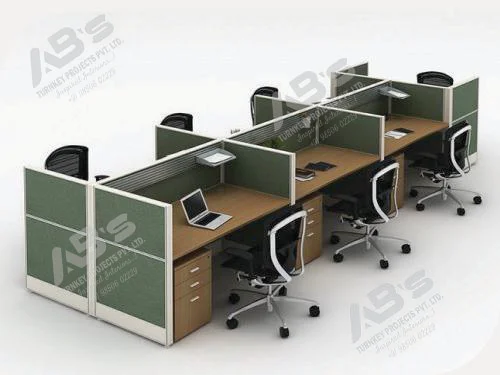
A typical office may also require workstations, reception counters, storage cabinets, executive desks, meeting tables, chairs, collaborative furniture, and pantry units.
Working with experienced commercial furniture manufacturers in Pune can make it easier to coordinate these different elements.
An experienced manufacturer can understand the practical requirements of a commercial workplace and suggest suitable materials, finishes, furniture configurations, and storage solutions.
Using consistent finishes across different furniture pieces can also give the office a more coordinated appearance.
For example, the same wood finish can be used on the conference table, reception desk, workstations, and storage cabinets.
- Coordinating Conference Tables with Workstations
The conference room should ideally feel like part of the same office rather than a separate environment.
The table’s design, colour, and materials can be coordinated with the workstation system.
For instance, an office could combine:
- Walnut-finish conference table
- Matching workstation surfaces
- Black metal frames
- Neutral-coloured chairs
- Wooden storage units
This creates a consistent visual style throughout the workplace.
Businesses planning a complete office setup can also work with experienced office workstation manufacturers in Pune to coordinate workstation dimensions, finishes, storage, and overall design.
- Ergonomics and Meeting Comfort
Meetings can sometimes continue for several hours, so comfort should not be overlooked.
The table should have an appropriate height for standard office chairs and provide sufficient legroom for everyone.
The edge profile should also be comfortable and should not create unnecessary pressure on users’ arms.
Each participant should have enough personal space to work comfortably without feeling crowded.
In larger boardrooms, seating should also be arranged so participants can communicate easily and see presentation screens without constantly turning or stretching.
A comfortable conference room can make long meetings considerably more productive.
- Effective Cable Management
Nothing makes a professional conference room look untidy faster than tangled cables.
A modern conference table should ideally have a well-planned cable management system.
Possible options include:
- Cable management boxes
- Concealed channels
- Floor boxes
- Pop-up power modules
- Under-table trays
- Integrated data panels
The best option depends on the room layout and technology requirements.
Cable management should be incorporated during the design and manufacturing stage. Trying to add it after the table has been installed can be more complicated and may affect the appearance.
- Selecting the Right Conference Table Finish
The finish of the table can significantly influence the appearance of the meeting room.
Popular options include:
- Natural wood
- Walnut
- Oak
- Teak
- White
- Grey
- Black
- Matte finishes
- Gloss finishes
- Two-tone combinations
Neutral wood tones are versatile and work well in many corporate environments.
More vibrant colours can be suitable for startups and creative workplaces, while traditional corporate boardrooms may benefit from understated finishes.
The table finish should complement the walls, flooring, ceiling, lighting, chairs, and other furniture.
- Conference Tables for Small Meeting Rooms
Large boardrooms are not necessary for every business.
Small meeting rooms are useful for interviews, quick discussions, one-to-one meetings, and small team sessions.
A compact table for four to six people may be sufficient.
Slim tables with lighter finishes can help a small room feel more spacious. Built-in charging points can also make these rooms more useful for modern teams.
Round and compact rectangular designs are especially practical for smaller spaces.
- Conference Tables for Large Boardrooms
Large boardrooms require more detailed planning.
The table should provide adequate workspace for every participant without making the room difficult to navigate.
Large meetings may also require multiple power points, microphones, speakers, display connections, and video conferencing equipment.
The table should be positioned so that everyone has a clear view of the presentation screen.
Before production begins, consider seating positions, screen locations, doorways, walking space, and equipment placement.
- Benefits of Modular Conference Tables
Flexible workplaces are increasing the use of modular furniture.
Rather than having one large permanent table, several smaller units can be combined and rearranged.
Depending on the activity, the same tables can be arranged in:
- Boardroom format
- Classroom arrangement
- U-shape
- Cluster configuration
- Collaborative layout
This makes modular tables particularly useful in training rooms and multipurpose office spaces.
- Conference Tables with Storage Solutions
Some meeting rooms require additional storage for files, stationery, presentation accessories, cables, and other supplies.
Storage can be placed beneath the table or along the surrounding walls.
However, excessive under-table storage can reduce legroom and make seating uncomfortable.
For larger storage requirements, side cabinets or credenzas are generally a better solution.
They can provide convenient storage without compromising the comfort of meeting participants.
- Glass Conference Tables
Glass tables can give a conference room a contemporary and premium feel.
They pair particularly well with glass partitions, aluminium framing, modern lighting, and minimalist furniture.
Because glass has a visually lightweight appearance, it can also make smaller meeting rooms appear more open.
However, glass surfaces require regular cleaning. Fingerprints, dust, and smudges can become noticeable, particularly in high-traffic meeting rooms.
Businesses should therefore consider both appearance and maintenance before choosing a glass tabletop.
- Wooden Conference Tables
Wood remains a popular choice for office conference rooms because it offers warmth and timeless appeal.
Wooden tables can suit both traditional and contemporary interiors.
Natural veneer can provide a premium appearance, while laminate wood finishes can deliver a similar visual effect at a more economical cost.
Wooden tables are particularly suitable for:
- Corporate boardrooms
- Executive meeting rooms
- Consulting firms
- Financial companies
- Law offices
- Corporate headquarters
The table can also be matched with executive desks and storage cabinets to create a consistent management area.
- Why Hardware Quality Matters
A conference table’s quality is determined by more than its tabletop.
The frame, legs, fasteners, edge banding, cable management components, and other fittings all affect durability and everyday performance.
Since commercial furniture is used frequently, these components should be selected carefully.
Before purchasing, ask the manufacturer about:
- Frame construction
- Edge finishing
- Hardware quality
- Surface durability
- Weight capacity
- Warranty
- Maintenance support
A dependable manufacturer should be able to provide clear information about the construction and specifications.
- Adding Corporate Branding
The conference room can also be used to subtly reinforce corporate identity.
Branding can be incorporated through:
- Company logos
- Corporate colours
- Engraved details
- Decorative inlays
- Branded power modules
- Matching furniture finishes
The branding should remain understated. A professional meeting room generally benefits from subtle branding rather than excessive promotional elements.
A small logo incorporated into the tabletop or surrounding furniture can create an elegant result.
- How to Choose the Right Manufacturer in Pune
When comparing conference table manufacturers in Pune, don’t make your decision solely on photographs or the lowest quotation.
Look at several factors, including:
- Manufacturing experience
- Material quality
- Range of designs
- Customisation options
- Production capabilities
- Installation services
- Delivery schedule
- Warranty
- After-sales support
If possible, review completed commercial projects or visit a showroom to assess the quality of materials and construction.
A manufacturer experienced in corporate furniture will generally have a better understanding of office ergonomics, technology integration, and space planning.
- Advantages of Working with a Local Pune Manufacturer
Businesses located in Pune can benefit from working with a manufacturer based in or around the city.
Potential advantages include:
- Easier communication
- Convenient site visits
- Faster measurements
- Local installation teams
- Better project coordination
- Easier customisation
- Accessible after-sales service
This can be especially valuable for large office projects where several furniture items need to be manufactured, delivered, and installed together.
- Conference Furniture as Part of the Complete Office
A conference table should not be selected in isolation.
It should work with the rest of the office interior, including:
- Flooring
- False ceiling
- Lighting
- Glass partitions
- Wall finishes
- Chairs
- Workstations
- Storage
- Reception furniture
- Corporate branding
For example, an expensive executive table may look inappropriate in an otherwise basic office interior. Similarly, a very simple table may not suit a premium corporate boardroom.
A coordinated design creates a more professional and visually balanced workplace.
- Sustainable Conference Furniture Choices
Sustainability is becoming increasingly important when companies purchase office furniture.
Businesses can look for products that use:
- Durable materials
- Long-lasting finishes
- Repairable components
- Efficient material usage
- Reusable systems
- Low-maintenance surfaces
A well-built conference table that lasts for many years can offer better value than an inexpensive product that needs to be replaced frequently.
Manufacturers can help businesses select materials according to expected usage, durability requirements, and budget.
- Maintaining Your Conference Table
Regular maintenance can help extend the life of office furniture.
Simple practices include:
- Cleaning surfaces regularly
- Avoiding abrasive cleaning products
- Using coasters for drinks
- Preventing water from remaining on surfaces
- Checking fittings periodically
- Avoiding dragging heavy equipment
- Keeping cable modules clean
- Repairing minor damage promptly
Maintenance requirements vary depending on the material, so always follow the manufacturer’s care recommendations.
- Latest Conference Table Design Trends
Modern meeting furniture is increasingly focused on technology, flexibility, comfort, and simple design.
Popular design directions include:
- Slim tabletops
- Rounded edges
- Built-in charging
- Wireless connectivity
- Modular designs
- Natural wood finishes
- Minimal metal frames
- Acoustic meeting spaces
- Compact collaboration tables
- Height-adjustable meeting tables
However, businesses should not follow trends simply because they are fashionable. The selected design should suit the company’s work culture and actual requirements.
- Getting the Best Value from Your Investment
The most expensive conference table is not necessarily the best choice.
Instead, businesses should identify the features that are most important for their daily use.
For example, a company that conducts frequent video conferences may benefit more from integrated power, data connectivity, and effective cable management than from an expensive tabletop finish.
A business that frequently meets clients, on the other hand, may want to prioritise premium materials and visual appearance.
Before making a purchase, consider:
- Frequency of use
- Number of users
- Room dimensions
- Technology requirements
- Expected lifespan
- Maintenance
- Budget
This approach helps ensure that the furniture investment delivers practical long-term value.
- Final Thoughts
A conference table is an important part of any modern office. It provides the central space where employees collaborate, clients meet management, presentations take place, and important business decisions are made.
The ideal table should offer a balance of appearance, comfort, durability, functionality, and technology support.
Businesses in Pune can choose from a wide range of options, including compact meeting tables, modular systems, large boardroom tables, premium executive designs, and fully customised furniture.
When evaluating conference table manufacturers in Pune, consider the complete package rather than concentrating only on the quoted price. Construction quality, materials, customisation, installation, warranty, and after-sales service can all affect the long-term performance of the product.
For a complete office furniture project, working with experienced commercial furniture manufacturers in Pune can make it easier to coordinate conference tables with workstations, storage, reception furniture, and executive areas.
Likewise, businesses developing a new office or renovating an existing workplace can work with experienced office workstation manufacturers in Pune to create a consistent furniture design throughout the workspace.
Ultimately, the right conference table should fit the room, suit the company’s working style, support modern technology, and remain comfortable and durable for years.
With proper planning and a reliable manufacturing partner, a conference room can become much more than a place for meetings. It can become a professional and comfortable environment that encourages collaboration, strengthens the company’s image, and supports better business decisions.